How do you know if a parent is safe to live alone?
Caring for elderly parents rarely begins with a major dramatic situation. It usually begins with little things: forgotten keys, unanswered calls, unpaid bills, or the sentence: “Oh, I just slipped a little."It is these little things that make many families ask the most important question too late.: is mom or dad still safe to live alone?
According to the World Health Organization (WHO), more than 30% of people over the age of 65 experience at least one fall per year, and this percentage increases further with age. Falls, misusing medications, and cognitive decline among the most common causes of loss of independence in old age. The Problem is that most of these changes do not occur suddenly, but gradually – and that is why the family often does not notice them in time.
This article will help you to objectively assess the situation, recognize early signs of risk and make a decision based on real indicators rather than fear, guilt or denial.
A short and clear answer
A parent is no longer safe to live alone if he has frequent falls, forgets therapy, shows signs of disorientation, neglects basic self-care, or cannot reliably call for help in the event of an accident.
Why is this question so important?
In clinical practice and daily life, the same pattern is often seen: the family waits “a little longer”, hoping that everything is under control. Unfortunately, very often the first real alarm becomes severe fall, hip fracture, dehydration or emergency hospitalization.
The U.S. CDC states that falls leading cause of death-related injuries in the elderly, while European Health Statistics show that falls and complications after them often represent the point after which full independence is no longer restored.
In other words, the question is not an exaggeration. The question is prevention.
The most common signs that independent living becomes risky
Falls and instability-the most dangerous signal
Falls are by far the most common and dangerous problem in older age. According to the WHO, they are the second most common cause of unintended injuries with a fatal outcome in the older population. But the problem is not only in the fall itself, but in what comes after it.
After the first serious fall, many older people develop the fear of moving. They begin to move less, lose muscle strength, the balance deteriorates further – and thus the risk of the next fall increases even more. This vicious cycle often ends with the loss of independence.
It is especially dangerous that older people often reduce the severity of falls. Sentences like” it's nothing “or” I just slipped a little " do not mean that the problem does not exist – on the contrary, they often mean that the person is trying to ignore it.
That is why modern guidelines increasingly emphasize the importance of early fall recognition and rapid response. In addition to space adaptation and physical therapy, technological aids are increasingly used, such as smartwatches with fall detection (e.g. Silve Monitorwhich do not prevent the fall, but significantly shorten the time until the arrival of help, which often decides the outcome.
Problems with taking drugs-silent and underestimated risk
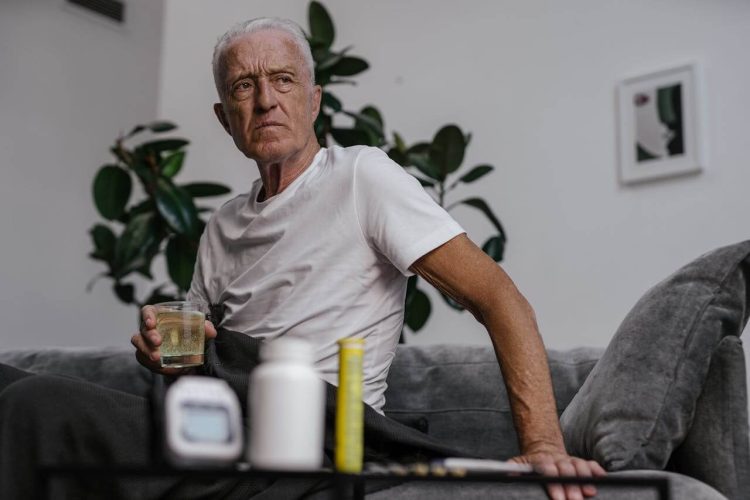
Improper treatment is one of the the most common causes of exacerbation of chronic diseases and emergency hospital admissions in the elderly. According to the European Medicines Agency, more than 50% of elderly patients do not take treatment exactly as directed.
With age, the number of drugs often increases. A phenomenon known as polypharmacy (taking five or more drugs a day) significantly increases the risk of errors, side effects, and dangerous interactions. In practice, it is often encountered that the person no longer knows why do you take a medication, nor what happens if he jumps over it.
This is especially dangerous for the family because it is a problem that it's not immediately visible. A person may look "good", while in the background the condition gradually worsens. That is why various reminder systems and digital aids are increasingly being used to help monitor therapy.
Problems with memory and orientation
Source: Pexels
You don't have to deal with dementia to be at risk. Mild cognitive decline, forgetting a deal, losing in a familiar environment, or leaving the stove on are already serious safety risks.
According to the Alzheimer's Association, any cognitive decline increases the risk of accidents at home, dehydration and not taking therapy. The Problem is that these changes are often attributed to “normal aging”, although in practice they can very quickly lead to dangerous situations.
Neglect of Hygiene and home – a sign of functional decline
When a person no longer maintains personal hygiene, does not cook regularly, or lives in an increasingly messy space, this often means that they are everyday tasks become too demanding. This is one of the most reliable signs that independent living is becoming risky.
Withdrawal and social isolation.
Social isolation is not just an emotional problem. Many studies have shown that it is related to faster physical and cognitive decline., greater risk of depression and poorer concern for one's own health.
Quick test for Family: 8 questions
If the answer is ”no" on more than 2-3 questions, it's time for a serious assessment:
- Is it safe to move around the apartment?
- Is he taking the therapy properly?
- Can you make yourself a meal?
- Can you take a bath on your own?
- Does he know how to manage money and accounts?
- Is it oriented in space and time?
- Can he call for help himself?
- Does he feel safe?
The biggest and most common mistake
"He's still good for his age.”
This is a sentence that doctors, nurses and caregivers hear just before the first serious accident.
What does it mean to “live alone”?
That no longer means being completely without any help. Today it means having system that reduces risk and enables quick response. This may include in-house assistance, occasional surveillance, but also technological solutions it's like a smart watch for seniors. which enable emergency call, monitoring of basic parameters and detection of crashes.
In this context, devices such as Silver Monitor they are used as additional layer of security not as a substitute for human care, but as a way to reduce the risk of something happening without anyone knowing.
Experience from practice
Almost every family later says:
"If only we had reacted earlier.”
Key message
Independent living is safe only as long as a person can walk safely, properly take therapy, take care of himself and reliably call for help. When this is no longer the case, support is needed.
This is related to practical steps to reduce constant worry, which you can find in our article How to reduce the feeling of constant care for a parent who lives alone.
Frequently asked questions
How do you know if a parent is safe to live alone?
If he has Falls, forgets therapy, is disoriented, or neglects basic needs – it is no longer safe.
Is one drop a cause for concern?
Yeah. One drop significantly increases the risk of the next and should be taken seriously.
Is there a home for the elderly?
Yeah. There are various forms of assistance: home assistance, technical aids, supervision and combined solutions.
Conclusion
The goal is not to take away a parent's independence. The goal is prevent independence from ending in serious injury or crisis.