Heavy users in the home for the elderly — how to organize care
Who are heavy users and why are they becoming more and more
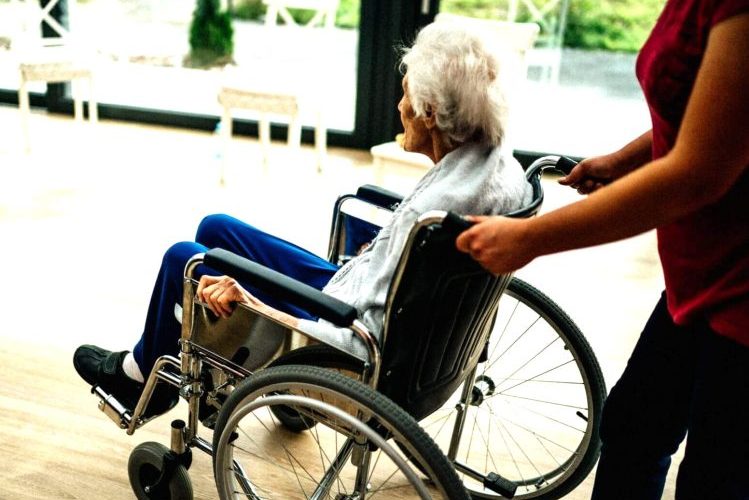
The term "heavy user" in the context of a nursing home does not refer to behavior — but to a level of medical needs that exceeds the standard of care that a home can provide with standard protocols. These are users who are immobile or poorly Mobile, who have three or more chronic diagnoses, who are dependent on assistance in all activities of daily life, or who are in the palliative phase of the disease.
The number of these users in private nursing homes is growing for one simple reason: the waiting list for public homes and specialized health care facilities is long, and families need a solution immediately. Private homes take over users that the public system cannot or cannot receive quickly enough-and thus assume a level of medical responsibility for which they are not always adequately prepared or equipped.
Voditelji domova koji su javno govorili o ovom problemu opisuju isti obrazac: korisnik dolazi s dokumentacijom koja prikazuje stabilno stanje, a stvarna razina potreba postaje vidljiva tek u prvim tjednima boravka. Do tada dom je već preuzeo obvezu skrbi — i mora je ispuniti s resursima koji nisu planirani za tu razinu potreba.
Three medical profiles that burden the home beyond capacity
Not all heavy users are equally demanding in the same way. Understanding the medical profile a home has in the user population is key to planning staff capacity, equipment and protocols.
The first profile is immobile users with decubital wounds or the risk of their occurrence. Prevention and treatment of decubitus requires regular repositioning, specialized care and documentation that must be accurate and continuous. A single user with active decubitus can occupy between one and two hours of care per day just for that need — which in a shift with reduced staff means severe pressure on the rest of the team.
The second profile is users with multiple chronic diseases who take five or more medications per day. Polytherapy in this population carries a high risk of interactions, side effects, and instability of conditions that can change rapidly. Measuring vital signs once a day is not enough for this group — changes in blood pressure, pulse, or oxygen saturation that occur between morning and evening measurements may be clinically significant, and are not detected by the home.
The third profile is users in the palliative stage-those for whom treatment is no longer the goal, but who need high-quality symptomatic care, pain control and a dignified end of life. Palliative care requires special staff education, clear protocols for managing symptoms, and intensive communication with the family going through an extremely difficult emotional period. Homes that do not have experience with palliative care often respond by sending users to the hospital at each deterioration — which is not in the user's interest, burdens emergency medical care, and generates costs that the home did not plan.
What medical supervision really means for a home that is not a hospital
A nursing home is not a hospital — and it shouldn't be. But users with complex medical needs require a level of monitoring that exceeds what a standard patronage visit once or twice a day can provide.
The key difference between medical monitoring in a hospital and in a nursing home is not just in equipment — it's in continuity. In the hospital, vital signs are measured multiple times per shift, changes are recorded immediately and the medical team responds to each anomaly. In a nursing home, the measurement is provided in certain terms, and in between terms the user is practically without objective medical supervision.
For users with mild or moderate needs, this interval between measurements is acceptable. For users with a complex medical profile-it is not. Instability of blood pressure, episodes of hypoglycemia, drop in oxygen saturation, or arrhythmia that develops between two measurements can have serious consequences that are preventable only if there is a system that monitors continuously rather than periodically.
The difference between a home that cares for heavy users safely and a home that does so at high risk is not in the number of nurses — but in whether the home has continuous insight into the user's condition between visits by medical staff.
The most common failures in care for difficult users — and their consequences
Failures in the care of users with complex medical needs are rarely the result of negligence — most often the result of a system not designed for that level of needs. Recognizing the most common omissions helps the principal identify where the holes in the existing protocol are.
The most common omission is insufficient frequency of vital signs monitoring. A home that measures blood pressure once a day for a user who takes antihypertensive drugs and has a history of cardiovascular episodes does not track — it registers. Recording is not the same thing as tracking, as it does not detect changes that occur between measurements.
Another common omission is the disconnect of information between shifts. When the morning shift measures high blood pressure and records it, that information must be visible to the afternoon and night shift — and must trigger some action if the trend continues. In homes that work with paper documentation or split records by shift, this information often doesn't travel as it should.
The third failure is the late recognition of deterioration that begins with subtle signs. A user who becomes a little quieter, a little less interested in a meal, who stays in bed a little longer — these signals precede a more serious deterioration, but the routine shift does not detect them because there is no tool to measure them objectively and compare them with the previous state of the same user.
How to organize care for heavy users with existing capacities
Home principals who successfully care for users with complex medical needs without a proportional increase in the number of medical staff do one thing differently: they differentiate users according to the level of supervision needed and allocate resources according to that level, rather than evenly across all users.
Practically, it means stratifying the population of the home to three levels. Users who are stable and have a low level of medical needs require standard monitoring — regular visits, measuring vital signs once a day, routine care. Users with moderate needs require increased monitoring-more frequent measurement, active monitoring of taking therapy, regular assessment of the condition. Users with complex needs require continuous monitoring-which in practice means technology that monitors between manual measurements and alarms that inform staff when parameters exit a defined range.
This stratification does not require new staff — it requires a system that supports differentiated surveillance. Silve Monitor the institutional solution allows for just that: defining individual thresholds for each user, an automatic alert when vital signs come out of that threshold, and a central overview that gives the shift team an instant picture of the state of all users without manually compiling information from multiple sources.
The stratification of users according to the level of medical needs and the differentiated supervision resulting from it is not an administrative exercise — but an operational decision that determines how the Home uses the capacity of the staff it has. A home that provides all users with the same supervision spends the same resources on those who do not need it and on those who do not need it.
Real monitoring is not the same for everyone-it is appropriate for each user separately.
Palliative care as a separate category
Users in the palliative phase deserve special attention in this context because their needs are not medically complex in terms of treatment — but in terms of monitoring and managing symptoms. The goal is not to cure or stabilize a chronic disease-but to ensure that the user spends the remaining time without pain, with dignity and with the maximum possible satisfaction with the quality of life.
For the home, it means a protocol that clearly defines who makes decisions about interventions when the user's condition worsens, what is done when the user refuses food or therapy, how to communicate with the family that may be in the negation or intense grief phase, and what are the symptoms that require medical intervention as opposed to those that are part of the natural process.
Homes that do not have this protocol end up the same way: at the first serious deterioration they call an ambulance, the user goes to the hospital, spends the last days or weeks there in an environment that is neither a home nor a hospice, and the family is left with the feeling that the home was not ready for what was coming. This is not a good outcome for the user, for the family, or for the reputation of the home.
Palliative care in a nursing home is not a specialization — it is a competence that any home receiving users over the age of 75 must develop. A home that does not have a protocol for the palliative phase is not ready for the reality of the population it cares for.
A dignified end to life does not begin at the moment of deterioration — it begins with a protocol written while the user is still stable.
Frequently asked questions
How to assess whether a home can safely care for users with complex medical needs?
The assessment is based on three questions: whether the home has medical staff with the competencies necessary for this level of needs, whether there is a continuous monitoring system that detects changes between shifts, and whether there is a clear protocol for escalation when the user's condition requires intervention outside the home's capacity. If the answer to any of these questions is negative, the home should either develop that capacity or be transparent to the family about the limits of care that can be provided.
How many medical personnel need a home that takes care of heavy users?
There is no universal ratio that is valid for all homes — it depends on the profile of the user population. A home with a high proportion of third-degree care beneficiaries needs proportionally more medical staff than a home with predominantly independent beneficiaries. Technology that takes on continuous monitoring of vital signs can compensate for some of the burden on medical personnel-but it cannot replace clinical assessment and intervention that require expertise.
What to do when a user who is accepted as stable shows more complex needs than expected?
Transparent communication with the family from the first moment when the difference between the documented and actual state of the user is identified. Revision of the care plan with a precise description of the level of needs and capacity of the home to meet them. If the home cannot safely take care of the user at this level of needs, this should be clearly communicated to the family — with enough time to find alternative accommodation, rather than as an emergency notification in a time of crisis.
How to document care for heavy users for inspection purposes?
The documentation must monitor the level of user needs — meaning that for third-stage care users it must be more detailed and frequent than for lower-level users. An individual care plan with a clear description of medical needs, a frequency of measurement of vital signs corresponding to the risk profile, a record of all interventions with timestamps, and a record of communication with the family and the doctor accompanying the user — this is the minimum that the inspection requires for this group of users.
How to communicate with the family of users in the palliative phase?
Proactively, regularly and with a clear framework of what the family can expect. The conversation about the palliative phase should take place while the user is still stable — not at a time of deterioration. In this conversation, the home and family need to agree on what to do when certain scenarios come up, who makes decisions if the user can no longer, and what is the priority — extending the life or quality of what remains. A documented record of this conversation protects the home and facilitates decision-making in difficult times.
Is it possible to refuse admission to users with complex medical needs?
Yes-and sometimes it's a responsible decision. A home that clearly defines the care capacities it can provide and communicates these boundaries transparently at reception acts more responsibly than a home that receives all users and then struggles with needs it cannot meet. A clear admissions policy, which includes assessing the level of needs and comparing it with the capacity of the home, protects both users and the home.
Conclusion
Users with complex medical needs are no exception in modern nursing homes — they are a growing reality of demographic development and insufficient capacities of the public care system. A home that does not have the system, protocols and capacities for this group cannot take care of them safely — regardless of the number and commitment of staff.
The organization of safe care for heavy users begins with the stratification of the population according to the level of needs, continues with protocols that are tailored to each profile and is supported by technology that gives continuous insight into the condition of users between shifts of medical staff. This is not an ideal picture of the future of homes — this is the operational minimum for homes that are already caring for the population we describe in this text.